Clearwater Pond & Dam Flocculant
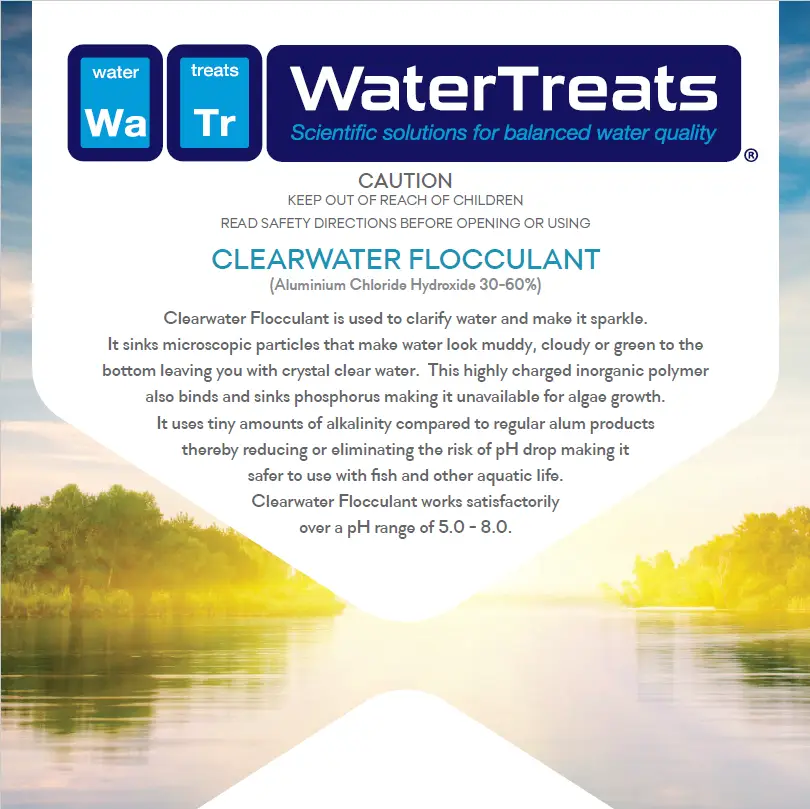
Improve water clarity and reduce excess phosphorus with Clearwater Flocculant, a concentrated treatment designed for dams, ponds and wastewater lagoons containing fine suspended inorganic material such as soil, clay and sand.
Clearwater Flocculant works by introducing an opposing ionic charge to suspended particles, causing them to bind together into larger particles that can settle out of the water column. It can also bind dissolved phosphorus, helping make it less available for algal growth and assisting with the management of nutrient-rich water.
Features
- Helps clear muddy and turbid water
- Binds fine suspended particles so they can settle
- Helps bind and remove phosphorus from the water column
- Assists in reducing nutrients available for algal growth
- Most effective within a pH range of 5.0–8.0
- Suitable for dams, ponds and wastewater lagoons
- Safe for fish, wildlife and aquatic plants when used at the appropriate dose rate
- Suitable for water bodies experiencing excessive phosphorus or suspended sediment
Suitable For
- Muddy or cloudy dams
- Ponds and lakes
- Wastewater treatment lagoons
- Water containing suspended soil, clay or sand
- Water bodies with elevated phosphorus
- Algae management programs where phosphorus reduction is required
Dosage
- Suggested starting rate: 1 litres per 50,000 litres of water
- Dose rates may need to be increased or decreased depending on site-specific conditions such as soil type, water temperature and the amount of suspended material.
- More accurate dosing can be established through onsite testing.
- We recommend having approximately 20% additional product available in case a higher treatment rate is required during application.
How to Apply
- Dilute 1 part Clearwater Flocculant with 5–10 parts fresh water.
- Spray or pour the diluted solution evenly over the entire water surface.
- Thoroughly mix and circulate the water using a pump, aerator or motorboat so the product comes into contact with suspended particles.
- Small pinhead-sized particles should begin to form and gradually increase to approximately match-head size.
- Once larger floc particles have formed, stop mixing and allow the particles to settle overnight.
- Repeat the treatment process if required.
For Best Results
Good initial coverage and thorough circulation will generally provide faster and more effective clarification while reducing the total amount of product required.
It is important to have enough product available during the initial treatment. If particles begin to floc but do not become large enough to settle, additional flocculant may need to be applied immediately. Having approximately 20% extra product on hand can help ensure the treatment can be completed effectively without needing to restart the process.