Western Pygmy Perch – PERTH WA ENDEMIC SPECIES
Nannoperca vittata
Native to the Southwest region of WA, these fish are very popular and suitable for ponds or aquariums. They eat mosquito larvae, tolerate the conditions in Southwest WA in cold and warm water, will breed in captivity and are frog friendly. In the wild they’re found from the Waychinicup River east of Albany to the Arrowsmith River, 300 km North of Perth, and they have stunning unique features making them a fantastic choice for aquariums, native ponds, natural pools, dams and almost any body of water in the Southwest.
Diet:
Western Pygmy Perch in their natural environment will eat mosquito, caddisfly or other insect larvae and bottom-dwelling micro-crustaceans.
In outdoor ponds, they are typically self-sustaining in a natural ecosystem, and in aquariums they can accept a broad diet of almost anything, but do best on crustaceans or foods closest to their natural diet. Blood worms, Daphnia, Brine Shrimp, mosquito larvae, fish flakes or similar foods are commonly recommended.
Conditions:
Because these fish are endemic to the Southwest, they can tolerate a wide range of temperatures that our waters experience with seasonal changes. They do best in temperatures between 7°C and 24°C, but can tolerate short term cold or hot conditions from 2°C to 32°C. They prefer shaded areas with a woody or detritus substrate, and aquatic plants or other cover to hide around closer to their natural environment of stream margins.
Features:
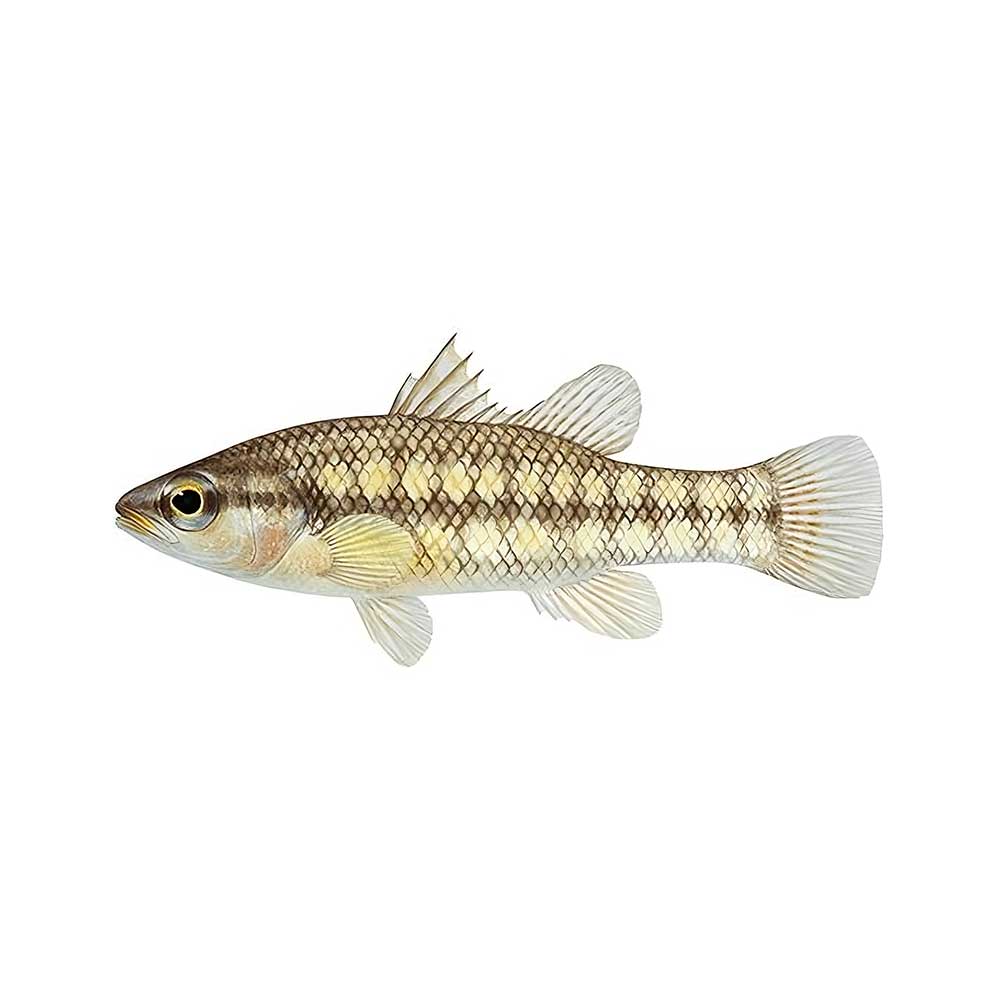
Western Pygmy Perch are identified as different to other pygmy perches by their small mouth, mottled coloration and 8-11 tubed scales on their side, along the lateral line. They have an overall brownish colour, with a white or pink belly, and 2 beautiful white or pale stripes down their side. During breeding season, in spring or summer, males will have their fins fade from transparent to a blackish colour, and will become more orange in colour along their pale stripes, while females may have a shade of blue. They grow up to a maximum of 8cm, but more commonly cap out at 6cm, and will live up to 5 years, reaching sexual maturity after 1.
Perks – They love to eat mosquitos
These fish eat more mosquito larvae than mosquitofish, and not only do they consume mosquito larvae at high rates, but they also don’t attack local frogs, tadpoles, or other native wildlife, making them a much better biological control agent.
NO SHIPPING – STORE PICKUP ONLY


