In a city where summer stretches for months, and water restrictions are a seasonal ritual, traditional gardening can feel like a losing battle. Aquaponics offers a smarter path, one that turns water scarcity from a problem into a design constraint it was built to solve.
The problem with gardening in Perth
Perth receives an average of just 734mm of rainfall per year, most of it concentrated in the cooler months, leaving gardens starved of moisture through long, relentless summers. Couple that with increasingly tight water restrictions and declining groundwater supplies, and you have a city that desperately needs a different approach to growing food.
Conventional soil gardening loses enormous volumes of water to evaporation, runoff, and deep drainage. On a hot Perth afternoon, water applied to bare soil can vanish within hours, doing little good for the plants it was meant to nourish.
What aquaponics actually is
Aquaponics combines aquaculture (raising fish) with hydroponics (growing plants in water) into a single, closed-loop system. The relationship between fish and plants is genuinely symbiotic; each sustains the other.
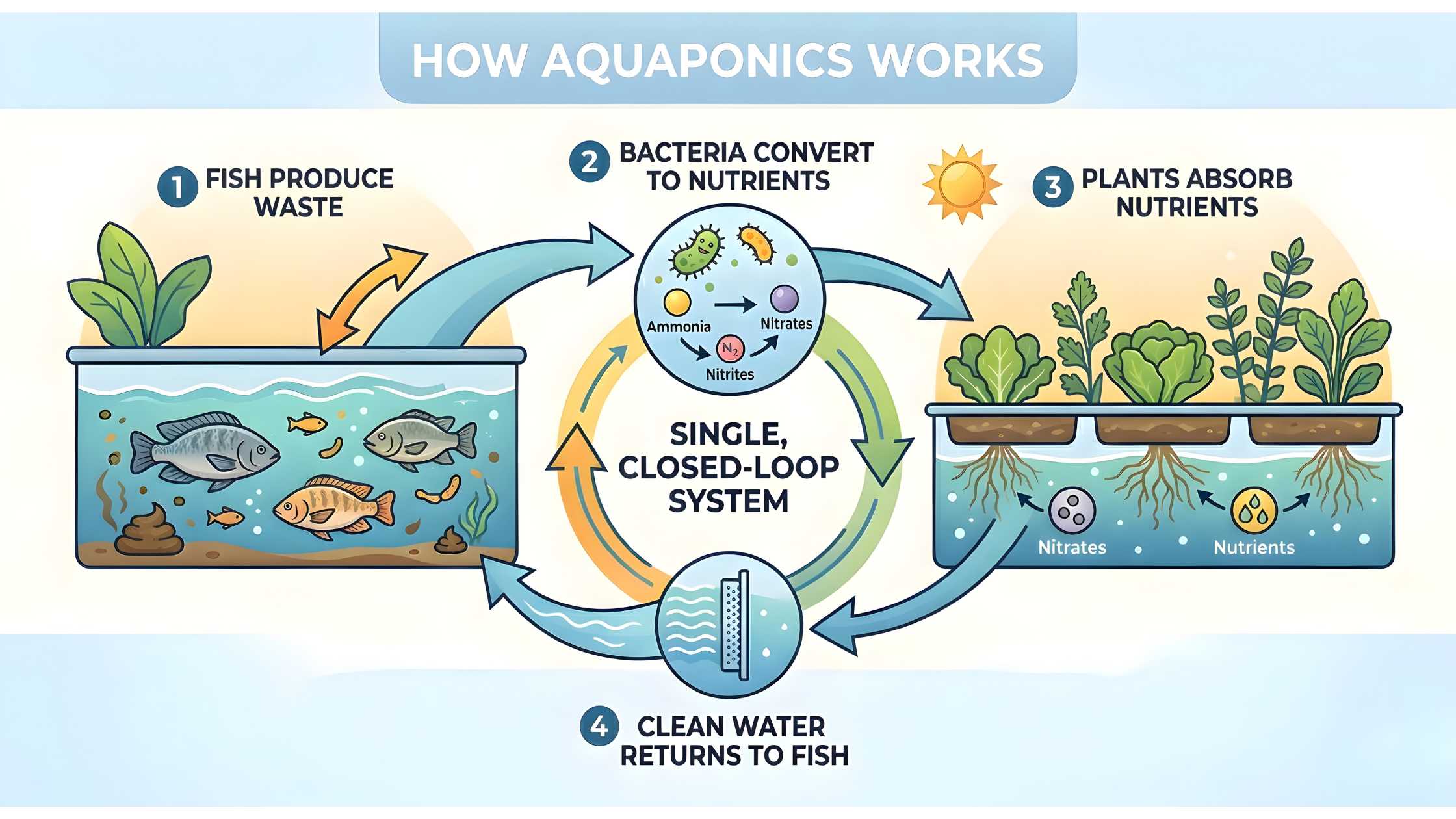
Because water circulates continuously rather than being applied and lost, the system achieves an efficiency that soil gardening simply cannot match.
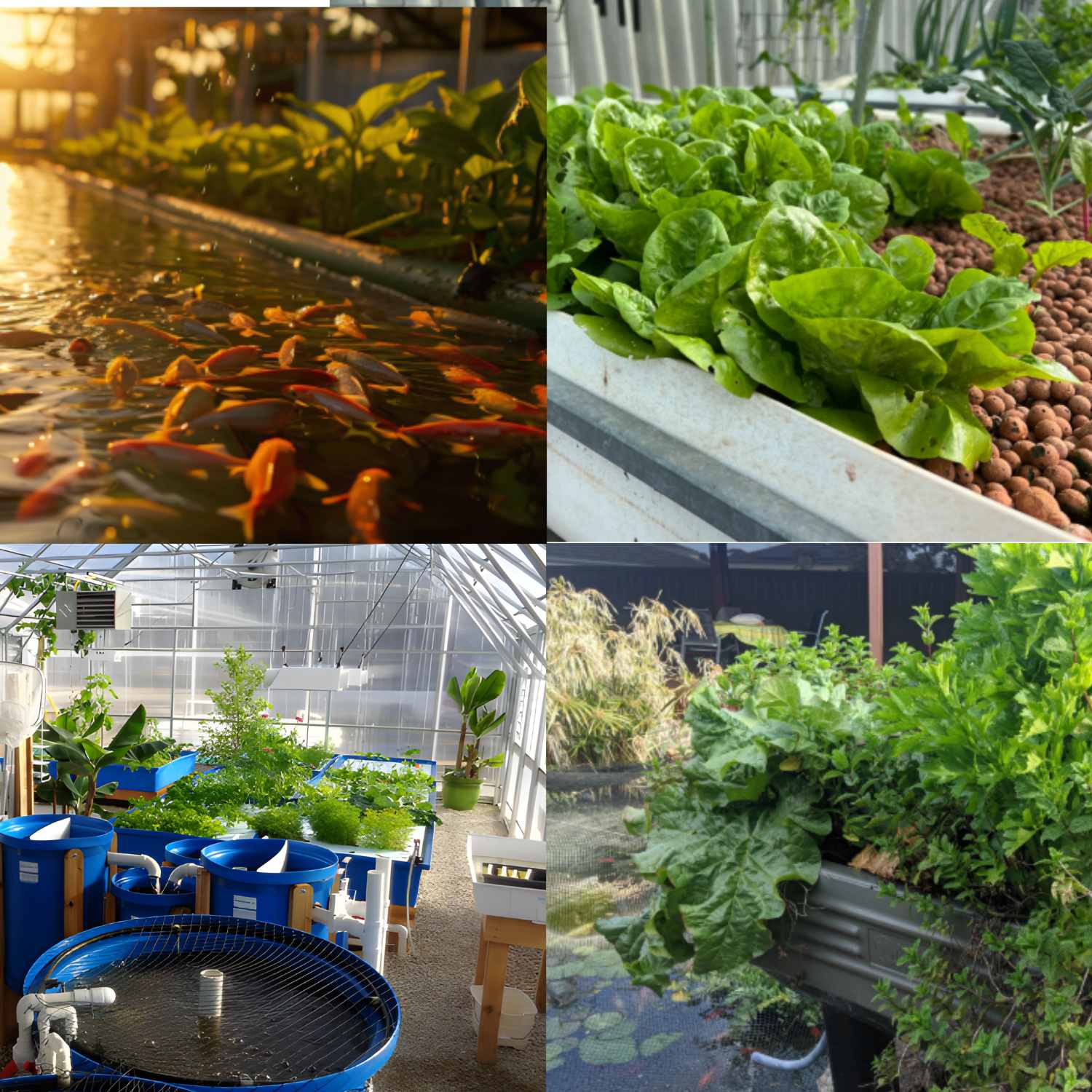
How much water does an aquaponic system actually save?
The comparison is striking. An aquaponic system typically uses 90% to 95% less water than traditional soil-based agriculture. A conventional vegetable garden requires constant irrigation to maintain soil moisture. An aquaponic system, once filled, only needs small top-ups to replace minor losses, primarily from transpiration and splashing.
Four key mechanisms drive this efficiency:
- Water is recirculated rather than discharged
- Tanks and pipes minimise surface evaporation
- There is no runoff to carry nutrients away
- Plants receive water directly at their roots, where it is needed most
Why Perth’s climate is actually an advantage
Perth’s Mediterranean climate, with hot, dry summers and mild, wet winters, is often framed as a barrier to growing food. For aquaponics, it is largely an asset. Warm-water species like barramundi thrive during the summer months, while cooler winter conditions are ideal for species such as rainbow trout, enabling a seasonal rotation of food fish throughout the year. In addition, hardy, year-round species like silver perch can be used across seasons, providing flexibility and continuity in production. These temperature shifts also support strong bacterial activity, accelerating nutrient conversion. At the same time, many high-value crops, including basil, tomatoes, and capsicum, flourish in the heat once their water and nutrient supply is stable.
The seasonality that defines Perth’s rainfall becomes largely irrelevant when your growing system carries its own water supply. You fill it once, then manage minor top-ups. The garden runs regardless of whether it has rained.
The broader benefits of an aquaponic worth knowing
- Faster plant growth
Plants receive a constant supply of nutrients and oxygen, often growing noticeably faster than in soil.
- No weeding or digging
No soil means fewer weeds, less labour, and a cleaner growing environment throughout the season.
- Fewer pests and diseases
Controlled systems significantly reduce the soil-borne issues that commonly affect traditional gardens.
- Dual harvest
Harvest both vegetables and fish, two food sources, from a single compact footprint.
- Works in small spaces
Backyards, patios, and urban setups are all viable. You scale the system to the space you have. You can grow vertically.
- No synthetic fertilisers
Fish waste provides all the nutrients plants need, no chemical inputs, no runoff into local waterways.
- Traditional farming = more land, more water, more emissions
- Aquaponics = less waste, more efficiency—but needs smart energy use
The easiest crops to start with in Perth
If you are setting up your first system, begin with crops that are forgiving, fast-growing, and well-suited to Perth’s climate.
LEAFY GREENS , best for beginners
- Lettuce
- Spinach
- Kale
- Rocket (arugula)
HERBS , fast and rewarding
- Basil (especially loves Perth summers)
- Mint
- Coriander
- Parsley
FRUITING VEGETABLES , once your system is established
- Cherry tomatoes
- Capsicum
- Cucumbers
OTHER RELIABLE OPTIONS
- Spring onions
- Bok choy
- Silverbeet
Basil deserves special mention for Perth growers; it genuinely loves the heat and produces prolifically through summer in aquaponic conditions. Leafy greens like lettuce can be harvested within four to six weeks, giving you early feedback that your system is working well.
A resilient food system, not just a garden
The broader case for aquaponics in Perth goes beyond efficiency metrics. It is about building a food-growing system that is genuinely resilient to the pressures this city faces, declining rainfall, rising water costs, and growing uncertainty around food supply chains.
By continuously recycling water, eliminating the need for synthetic inputs, and producing two food streams from a single footprint, aquaponics is not just a clever alternative to soil gardening. It is a food system designed from first principles for environments where water is the limiting factor.
In Perth, that describes exactly where we are headed.
Ready to explore aquaponics for your home or backyard?
The best starting point is a simple media bed system: a fish tank, a grow bed, and a pump. From there, the biology does the work.
Contact Pases Aqua if you would like a quote on some DIY systems!