Algae control in Sydney’s lakes and stormwater ponds requires integrated management combining physical, biological, and chemical methods. The root cause of algal blooms in Sydney’s urban water bodies is excess nutrient loading, primarily nitrogen and phosphorus, from urban runoff. The most serious blooms involve cyanobacteria (blue-green algae), which produce toxins dangerous to humans, pets, and aquatic ecosystems. Effective long-term management targets nutrient sources upstream while applying in-lake treatments to control active blooms.
NSW regulations require EPA and council approval before chemical treatments are applied to waterways.
PASES Aqua works with private landholders, commercial operators, and local government across Perth, Sydney and New South Wales to design and deliver science-based lake and wetland management programs.
How to treat filamentous algae in dams & lakes – By Dr Dulana Herath (Or Dean) from PASES Aqua

Why Algae Is a Growing Problem in Sydney’s Water Bodies
Sydney’s urban lakes, stormwater retention basins, and ornamental ponds face year-round pressure from algal blooms driven by urbanisation, nutrient-laden runoff, and rising water temperatures. These factors combine to create conditions that favour rapid algal growth across Greater Sydney, including water bodies in Western Sydney, the Hills District, the Cumberland Plain, and inner-city parklands such as Centennial Park.
Cyanobacteria, commonly called blue-green algae, are the most serious category of algae found in Sydney’s water bodies. Cyanobacteria are photosynthetic bacteria capable of producing cyanotoxins, which are harmful to humans, domestic animals, livestock, and native aquatic species. Recreational lakes across the Greater Sydney region have been subject to repeated cyanobacterial bloom alerts and temporary access closures, creating public health risks that water managers and local councils are legally obligated to address.
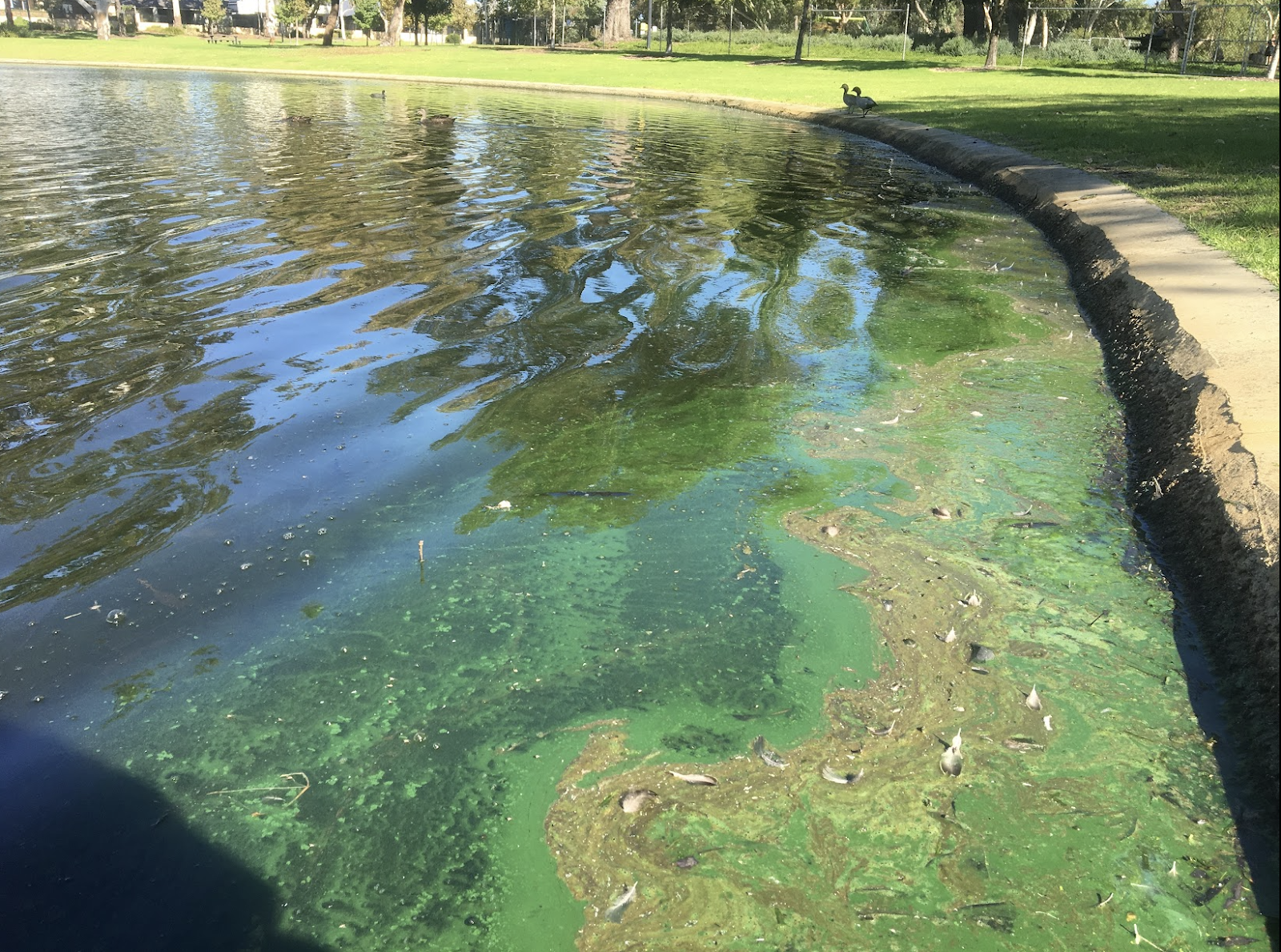
Blue-Green Algae (Cyanobacteria)
Early detection is critical. PASES Aqua’s wetland health monitoring service uses ecological diagnostics, including algae species identification, nutrient profiling, and water quality monitoring, to detect early signs of eutrophication and algal bloom development before conditions escalate.
Nutrient Loading – The Root Causes of Algal Blooms in Sydney
The primary cause of algal blooms in Sydney lakes and stormwater ponds is nutrient loading, which is the accumulation of excess nitrogen and phosphorus in the water column. In urban Sydney catchments, nitrogen and phosphorus enter water bodies through lawn fertilisers, pet waste, detergents, construction-site sediment, and organic matter washed off impervious surfaces such as roads, rooftops, and car parks during rainfall events.
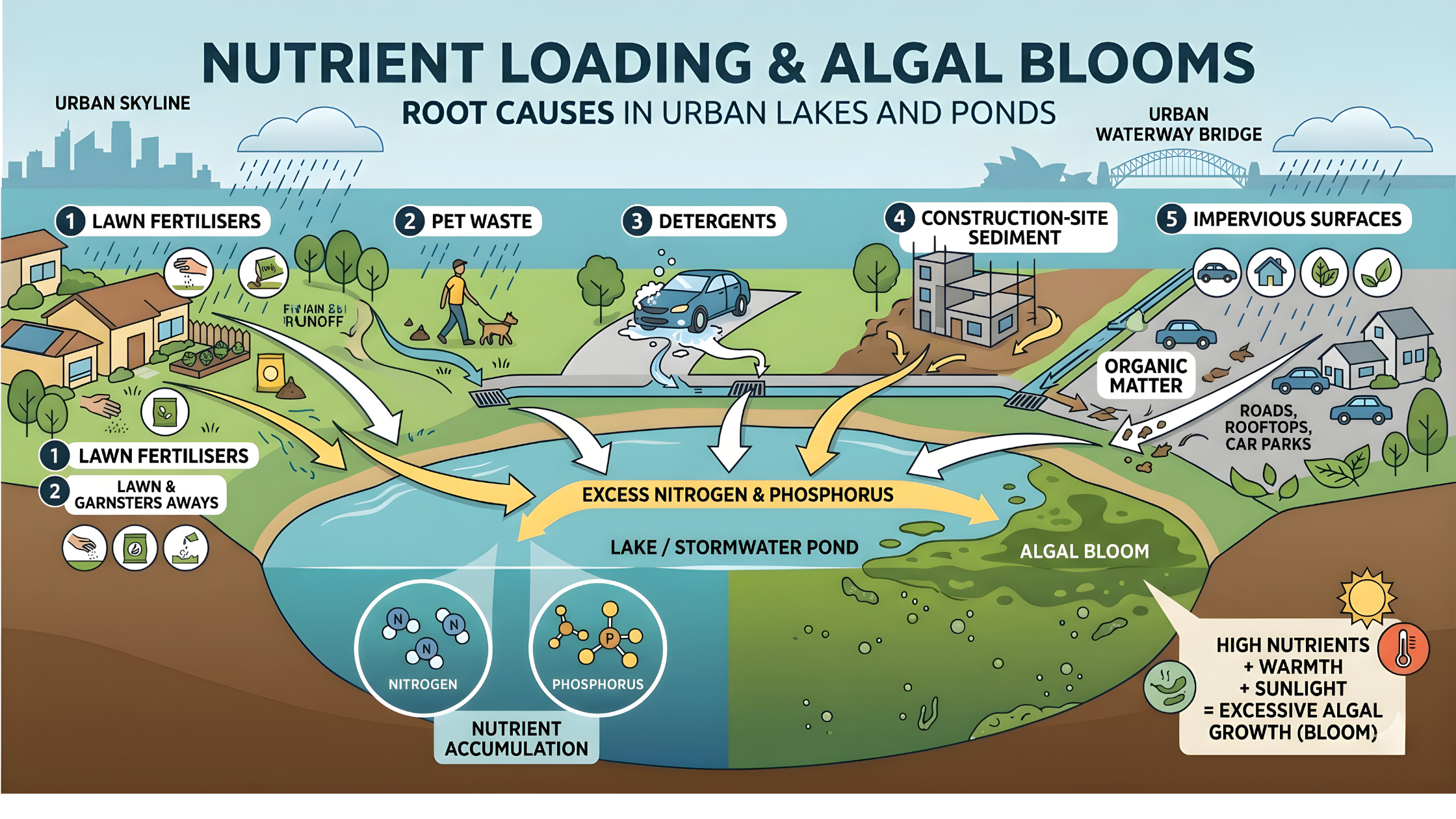
Shallow stormwater ponds are particularly exposed to algal blooms for four key reasons:
- Shallow water heats up faster than deeper lakes, accelerating algal reproduction
- High nutrient loads from urban runoff provide an abundant growth substrate
- Limited water depth reduces the dilution and dispersal of algal concentrations
- Low water movement allows surface scum to persist
Addressing upstream nutrient sources is the most durable long-term strategy for controlling algae. Water bodies already experiencing active blooms typically require immediate in-lake management alongside catchment-scale source control.
Quick fact: Phosphorus is the key limiting nutrient for algal growth in most Australian freshwater systems. Reducing phosphorus inputs by as little as 30% can significantly reduce bloom frequency over time.
Algae Control Methods for Sydney Lakes and Stormwater Ponds
No single method is universally effective for algae control in Sydney water bodies. Site managers typically combine multiple approaches based on:
- Water body size and depth
- Bloom severity and algal species present
- Recreational or ecological use of the site
- Available budget for capital works and ongoing maintenance
- Applicable environmental and regulatory constraints under NSW law.
Physical and Mechanical Methods
1. Aeration systems
Surface aerators, subsurface diffusers, and floating fountains are among the most widely used physical algae-control tools in Sydney stormwater ponds and small lakes.
Pases Lake and Dam Aerator King kit 3
Suitable for up to 1 acre lakes
Suitable for up to 1 acre lakes .3 way diffuser with all required hardware and 3x30m weighted airline
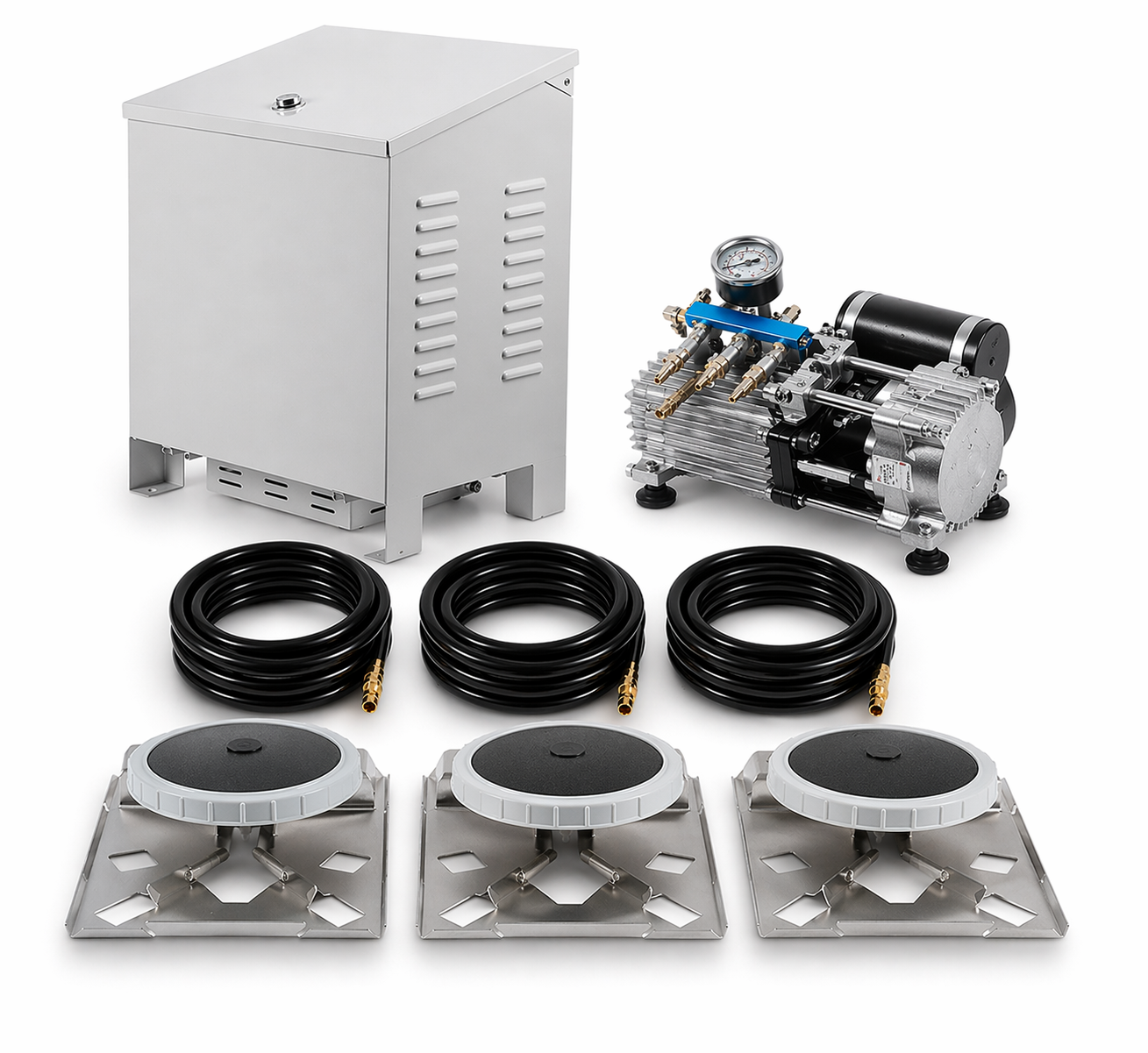
Aeration introduces dissolved oxygen into the water column and disrupts thermal stratification. Thermal stratification is the layering of warm, oxygen-depleted water near the surface, a condition that cyanobacteria exploit to position themselves at the optimal depth for sunlight absorption. Aeration systems that break up stratification have shown measurable reductions in cyanobacterial bloom frequency and dissolved oxygen deficits in Sydney-region water bodies.PASES Aqua evaluates, supplies, and installs lake bed and surface aeration systems sized specifically for each water body to enhance water quality and ecological character. A site evaluation is carried out before any system is recommended.

Surface aerators break up thermal stratification, one of the key conditions that allows cyanobacteria to dominate.
2. Destratification systems
Work by mechanically mixing the entire water column, reducing the temperature and light gradients that give cyanobacteria a competitive edge over non-toxic algal species. Destratification is most effective in water bodies deeper than 3 to 4 metres.
3. Sediment dredging
Removes phosphorus-laden bottom sediments from eutrophied ponds and lakes. Phosphorus accumulates in sediments over time and can be re-released into the water column under low-oxygen conditions, a process called internal nutrient loading. Dredging removes this internal phosphorus source but is a high-cost, invasive option requiring regulatory approval and careful management of excavated sediment.
Biological & Enzyme-Based Treatments
1. Biological & Enzyme-Based Treatments
Biological water treatment methods use beneficial bacteria, enzymes, and natural biological processes to improve water quality, reduce organic waste, and suppress algae growth without relying on harsh chemical algaecides. BBA Bacteria applications (often associated with BBA Biosolution or BBA Ecotech) involve using highly concentrated beneficial bacterial strains to naturally improve water quality, treat wastewater, enhance agricultural soil, and control odours.
Lake Fix 25L
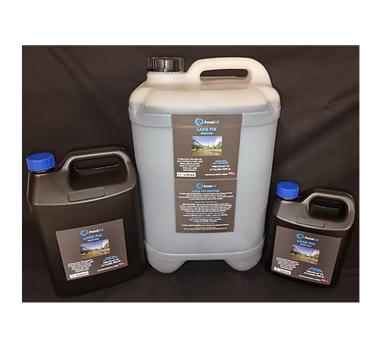
PondOZ Lake Fix Enzyme is a powerful natural enzyme treatment designed to improve water quality in lakes and large ponds. It works by breaking down excess organic matter while increasing beneficial bacteria levels to support a healthier aquatic ecosystem.
Formulated to reduce unwanted algal blooms, unpleasant odours, and harmful bacteria, PondOZ Lake Fix Enzyme helps restore cleaner, clearer water naturally. By stimulating beneficial bacteria, it accelerates the breakdown of decaying matter and unwanted organic compounds without relying on harsh chemicals.
Suitable for both fresh and saltwater applications, PondOZ Lake Fix Enzyme provides a safe, eco-friendly alternative to chemical-based water treatments.
For best results, apply in water temperatures above 15°C with high oxygen levels supported by fountains, venturis, waterfalls, or air pumps.
Clover Leaf 10kg
The unique minerals and enzymes in Blanket Answer work where many bacteria cultures fail. Safe for use with all pond fish, plants and biological filtration systems, and doesn’t require UV units or protein skimmers to be turned off.
Add Blanket Answer to the pond by mixing the powder into a can of pond water and evenly distributing over the surface. Initially the pond will turn a cloudy milky white, and will clear over 4-7 days, leaving a powdery layer on the pond liner.
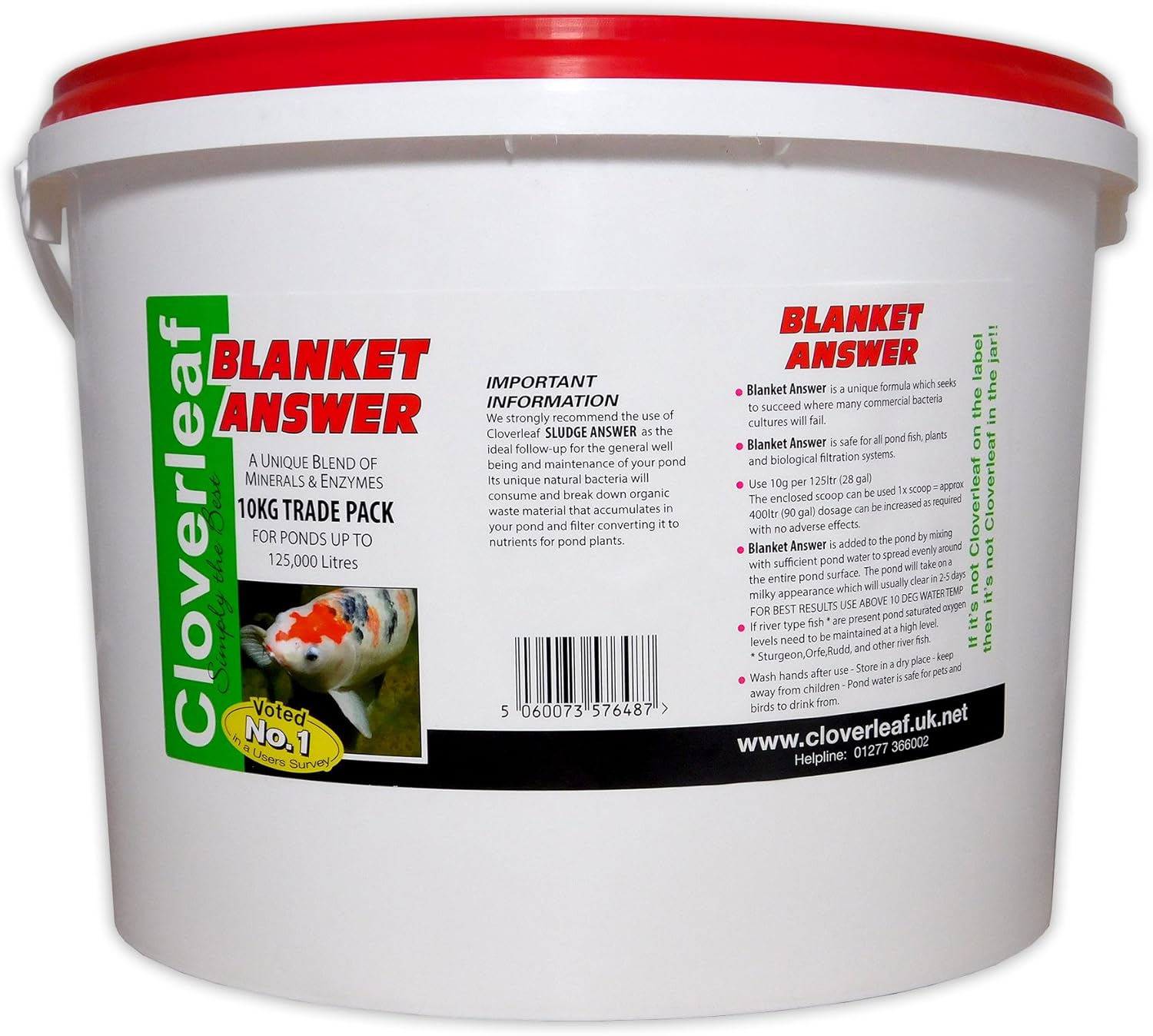
Mineral and enzyme-based products such as Clover Leaf Blanket Answer 10kg are also used in ornamental ponds and water features to help control blanket weed and algae by improving the biological balance of the pond ecosystem. These treatments are generally safe for fish, aquatic plants, and biological filtration systems, making them suitable for long-term pond maintenance.
2. Macrophyte planting
introduces rooted aquatic plants along shorelines and in shallow zones. Macrophytes control algae by absorbing nitrogen and phosphorus directly from the water column, competing with algae for sunlight, and stabilising sediments to reduce nutrient release. Macrophyte establishment is a long-term strategy with co-benefits for biodiversity and bank stability.
PASES Aqua manages aquatic and wetland revegetation projects from planning through to post-planting maintenance, including site preparation and species selection suited to local conditions across Greater Sydney.
For water bodies where additional nutrient uptake capacity is needed, PASES Aqua’s custom floating wetland panels are designed to support selected aquatic vegetation that penetrates the water column and actively absorbs nitrogen and phosphorus from the water.A well-established macrophyte fringe can absorb significant nutrient loads before they reach open water.
3. Filter-feeding organisms
Including freshwater mussels and zooplankton, they reduce algal biomass by directly grazing on phytoplankton. Establishing or supporting native fish and macroinvertebrate populations contributes to the ecological balance needed to keep algae in check. PASES Aqua conducts native fish and macroinvertebrate surveys to assess the ecological condition of lakes and reservoirs, and can carry out native fish restocking into dams and lakes at population densities that support a viable, self-sustaining community.
Where feral fish species such as carp are contributing to poor water quality by disturbing sediments and uprooting aquatic plants, PASES Aqua’s electrofishing and feral fish control service removes problem species using electrofishing boats, seine netting, and biological methods, followed by restocking with native species.
4.Phoslock
Is a lanthanum-modified clay product used in Australian lakes and stormwater ponds to bind dissolved phosphorus in the water column and cap phosphorus release from bottom sediments. Phoslock works because lanthanum ions in the clay permanently bind to phosphate ions, removing bioavailable phosphorus from the water. Several NSW councils have applied Phoslock treatments with positive short- to medium-term water quality outcomes. Phoslock is classified as a non-hazardous material and contains no synthetic chemicals.
Chemical Algaecides
1. Chelated copper
Copper Sulfate Aquatic Algaecide 15L
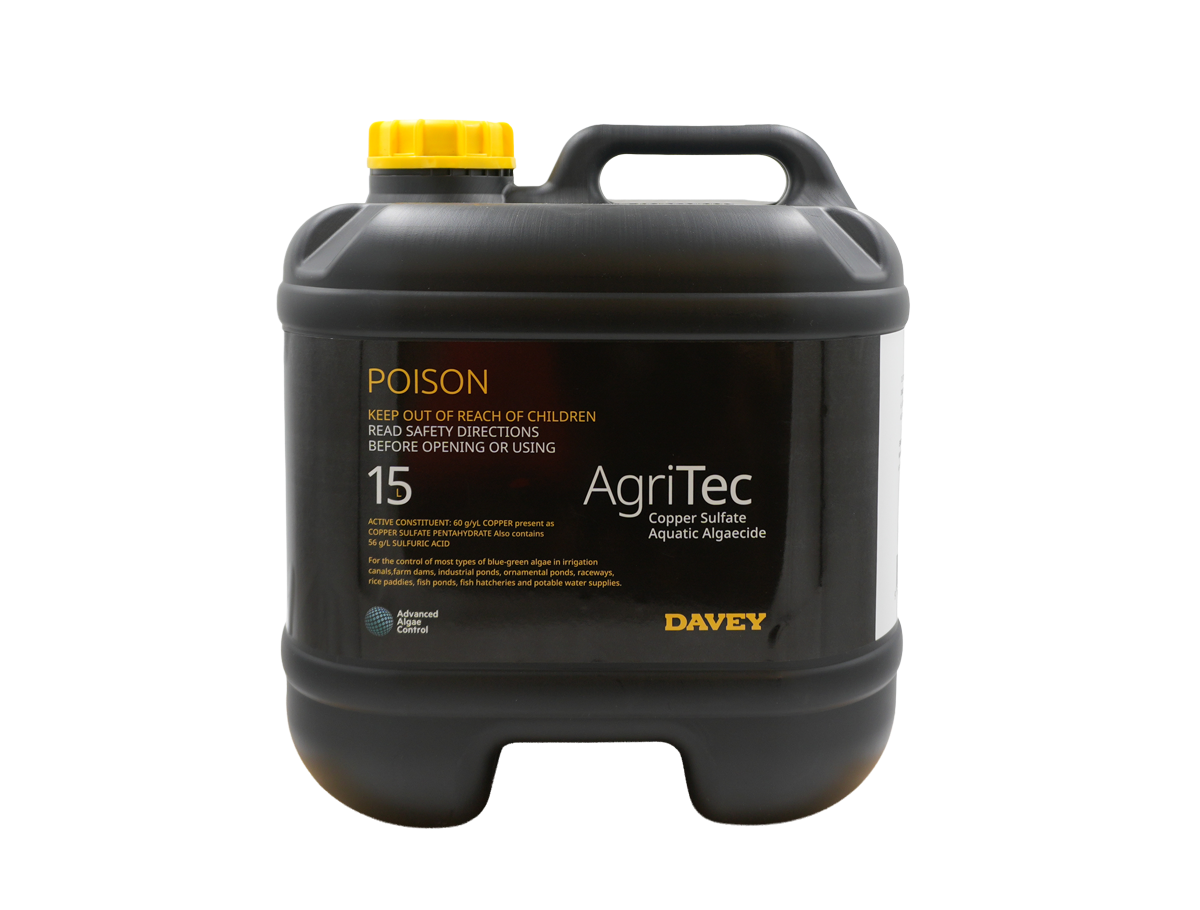
Chelated copper is a highly effective, specialised aquatic herbicide and algaecide used to control algae and submerged weeds in ponds, lakes, and water features. It works by wrapping copper atoms in a protective organic shell, allowing them to stay suspended in water longer, resist high alkalinity, and kill algae without sinking to the bottom, unlike traditional copper sulphate
2. Hydrogen peroxide
Is an algaecide used in Australian water management for targeted cyanobacterial bloom suppression. Hydrogen peroxide degrades rapidly into water and oxygen in the natural environment, reducing the risk of non-target ecological impacts. Hydrogen peroxide treatment requires specialist expertise, accurate dosing relative to algal biomass, and regulatory oversight. Hydrogen peroxide is most suitable for enclosed or semi-enclosed water bodies where dilution is limited.
PASES Aqua identifies the algae species present in a water body, determines an appropriate management plan, and applies environmentally safe algaecides where needed. Treatments are selected based on site-specific water quality data rather than a one-size-fits-all approach.
In-Lake Nutrient Management
Aquatic Safe Flocculants
Are used to clear turbid or cloudy water by binding suspended particles into larger clumps that settle to the bottom. PASES Aqua evaluates the efficiency and risk of flocculant use for specific water bodies before recommending or applying any treatment, ensuring the right product is matched to site conditions.
Read more – How to Get Rid of Algae in My Dam – Effective Control Strategies
Regulatory Framework: Algae Management in New South Wales
Algae management programs in New South Wales are subject to the following key regulatory requirements.
Under the Protection of the Environment Operations Act 1997, chemical algaecides applied to waterways may constitute a pollution offence if used without approval or in excess of permitted concentrations. The NSW Environment Protection Authority (EPA) issues guidance on approved algaecide types, dosing rates, and application methods. NSW Health maintains the Cyanobacteria Advisory Committee and issues blue-green algae alert guidelines for recreational water bodies. Local councils may have additional approval requirements for works within or adjacent to waterways under their local environmental plans (LEPs).
PASES Aqua’s wetland management plans are prepared with full awareness of these regulatory requirements, ensuring that every management action is legally sound and appropriately documented for council and EPA reporting purposes.
Choosing the Right Algae Control Strategy for Your Site
Selecting an algae control strategy for a Sydney lake or stormwater pond requires a site-specific water quality assessment covering:
- Primary nutrient sources and loads entering the water body
- Current and historical algal species composition and bloom frequency
- Water body depth, volume, and hydraulic retention time
- Recreational, ecological, and drinking water use of the site
- Available capital and operational budget for management works
Stormwater ponds with high nutrient loading and limited ecological significance typically benefit most from physical interventions such as aeration and inlet sediment interception, combined with upstream nutrient source reduction. Lakes with recreational access or ecological significance warrant a full integrated management plan incorporating biological, physical, and regulatory-compliant chemical control components, with ongoing monitoring and adaptive management.
Algae control is an ongoing management commitment, not a one-off intervention. Lasting outcomes require continuous monitoring, regular system maintenance, and a long-term strategy for reducing the nutrient loads that drive bloom conditions.
How PASES Aqua Can Help
PASES Aqua is an aquatic management specialist working with private landholders, commercial operators, and local government across New South Wales. Their team uses scientific, data-driven methods to maintain and restore the health of lakes, wetlands, and stormwater ponds of all sizes.
Relevant services for Sydney lake and stormwater pond managers include:
- Algae Management and Algaecide Applications — algae species identification, management planning, and safe algaecide treatment
- Aeration Evaluations and Installation — lake bed and surface aeration systems to improve water quality and ecological condition
- Wetland Health Monitoring — ongoing surveillance for algal outbreaks, poor water quality, and invasive species
- Wetland Management Plans — site-specific plans prepared for sustainable, long-term water body management
- Wetland Revegetation — aquatic planting projects from design to post-establishment maintenance
- Custom Floating Wetland Panels — purpose-built panels that support nutrient-absorbing vegetation in open water
- Flocculant Evaluations and Installation — assessment and application of flocculants for turbid or cloudy water bodies
- Native Fish and Macroinvertebrate Surveys — ecological assessments measuring biodiversity and biological balance
- Electrofishing and Feral Fish Control — feral fish removal and native species restocking
- Native Fish Restocking — stocking dams and lakes with native species at viable population levels
- Mosquito and Midge Control — environmental, physical, chemical, and biological mosquito management
Aquatic Weed Control and Removal — targeted weed identification and control using physical, chemical, and biological methods